
SINGAPORE, SG / ACCESS Newswire / April 13, 2026 / Over the past year, large language models have gotten dramatically more capable. The application layer has not. Skills, MCP, LangChain: every integration approach in use today is an adaptation layer, forcing AI to navigate interfaces built for human clicking and typing. And there is a harder problem underneath: Skills cannot be sold. No matter how capable the underlying model becomes, an application layer with no business model has a fixed ceiling.
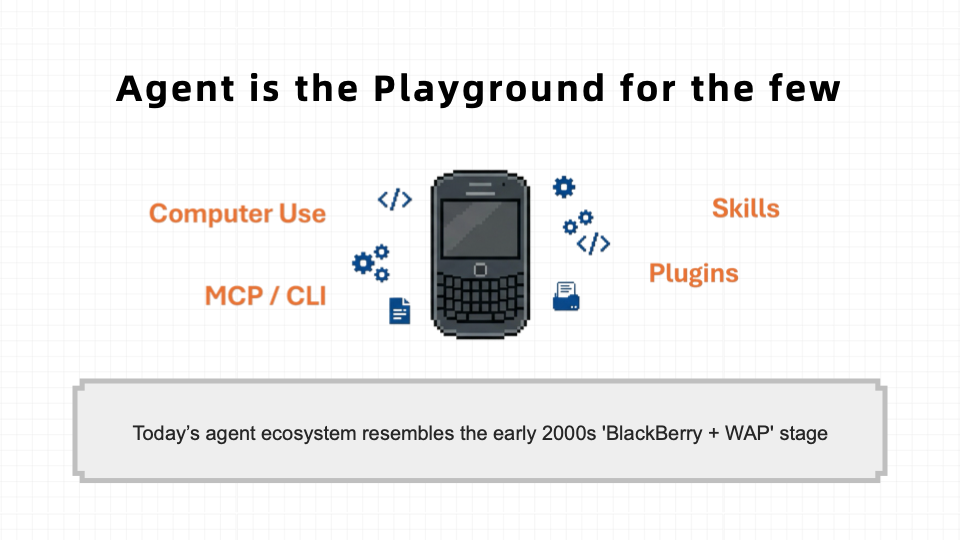
remio founder Andrew Wang, previously Senior Vice President at NetEase where he led the incubation of NetEase Cloud Music and Yanxuan, describes the current moment as “the BlackBerry and WAP stage.” He founded remio in 2024 as a personal context library, which has since evolved into a full agentic assistant platform. Every agent solution on the market today, in his view, is a transitional patch. The iPhone moment for AI will not come from smarter chatbots or better middleware. It will come when a new application ecosystem takes root, one where semantic interfaces replace graphical ones, and agents stop being laborers retrofitted into the old world and become residents of a new one.
remio recently announced the launch of its Agentic Application Ecosystem. The release is organized around three connected pieces: aApp, a new software format that defines what an AI-native application actually is; rOS, the purpose-built operating layer that makes those applications run; and aApp Market, a two-sided marketplace where builders can distribute and get paid for their work.
aApp: A New Kind of Software
The aApp (short for Agentic Application) is not a chatbot wrapper or a plugin script. Most agent tools today operate on a use-and-forget basis: open a chat window, finish a task, context gone. The next session starts cold. An aApp works differently. It runs in the background, watches for events in the user’s world, acts when something relevant happens, and writes results directly into the user’s files, emails, and calendar. Not into a text output window that disappears.
Three shifts separate it from what came before.
Interface. Traditional software is built around graphical interfaces for human operators. An aApp takes natural language as its primary input. Users describe what they want; the aApp handles retrieval, reasoning, and delivery. Individual aApps can be composed together, so capabilities combine across domains without the functional silos that define conventional software.
Operating mode. Existing agent tools are passive. They wait for a prompt, run a task, and stop. An aApp is event-driven and always on. It watches the user’s environment, detects meaningful changes, and acts at the right moment without being summoned. AI stops being something you have to remember to open.
Context. Every existing tool starts each session knowing nothing about the user. Background, preferences, work history: re-explained every time. An aApp runs on top of a live personal context: ongoing projects, past decisions, communication history. That context builds up over time. The longer the application runs, the more it reflects how a specific person actually works, not how the software vendor assumed they would.
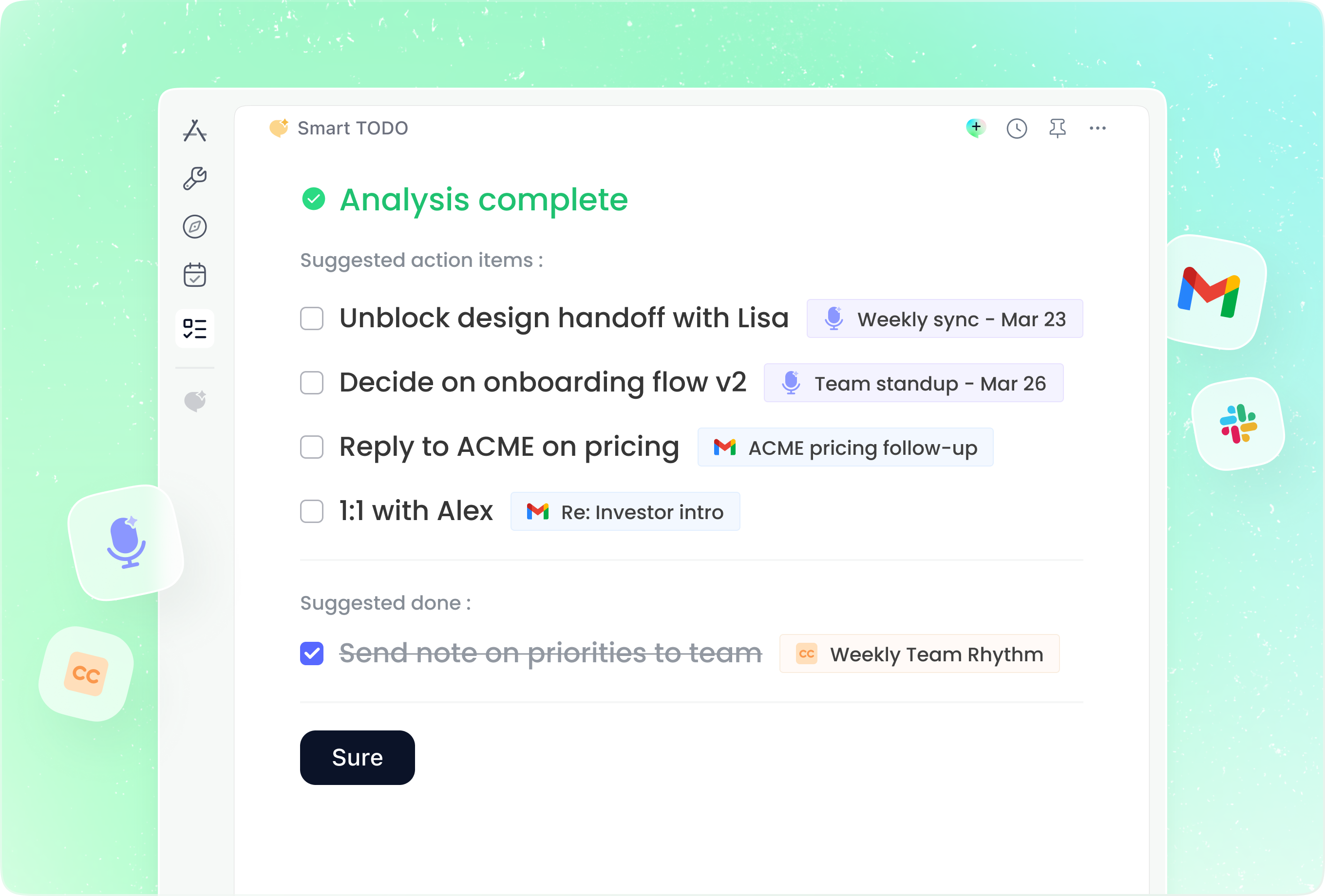
remio’s flagship aApp, Smart Todo, shows what this looks like in practice. Running as a background service, it subscribes to meeting recordings, emails, and chat messages. When a client sends a follow-up email about a quarterly report, Smart Todo catches the event, pulls the action item, finds the relevant document in the user’s knowledge base, and queues a draft response for review. No task manager opened. No prompt written. The same logic applies to weekly reports, HR candidate tracking, and compliance review. It is not a smarter reminder app. It is the first time a professional can stop managing the flow of information and start doing the work itself.
aApp Market: Where Deep Industry Knowledge Finally Gets Paid
To close the commercialization gap that has kept hard-won professional expertise stranded in chat windows, remio launched aApp Market alongside the ecosystem.
On the supply side, remio extends the definition of developer. Anyone who has built real expertise in a field, whether in sales, HR, legal, or operations, can build an aApp using aApp Studio, which generates working applications from natural language descriptions alone. No backend development experience required. rOS handles token billing, resource scaling, and deployment. The platform manages accounts and payment settlement through Stripe. To pull in early builders, remio launched with a zero-commission policy and device-level license protection, so developers’ proprietary workflows stay theirs.
On the demand side, users get a different kind of software purchase. Instead of buying a generic productivity tool and spending a week configuring it, they browse by industry, role, and use case, then subscribe to applications built around how they actually work. When an aApp activates, it reads the user’s authorized knowledge base and personal context immediately. There is no onboarding runway. It already knows who the user is.
Underneath both sides, the platform accumulates two data layers: the user’s personal digital memory, and the operational data generated by aApps running across industries. Both layers share the same underlying context infrastructure, which is a different model from the data silos that define conventional SaaS. The longer the ecosystem runs, the harder it becomes to replicate.
To build the early developer community, remio will host its inaugural aApp Development Challenge in April.
aApp Market is not a distribution platform with a commerce layer bolted on. It is where specialized expertise built over years in the field, for the first time, has a direct and reliable path to commercial value.
rOS and rVault: The Infrastructure Behind It
The things that make aApps work (event-driven operation, accumulating context, persistent background execution) depend on the infrastructure layer beneath them.
rOS is the operating layer built specifically for aApps. Where a conventional operating system manages files, processes, and memory for human users, rOS manages what that infrastructure was never built to handle: the full lifecycle of aApp operation including model calls, data ingestion, and result delivery; the user’s personal context as a first-class system resource; and security and permission enforcement across all of it. The relationship between rOS and aApps is the same as between iOS and mobile apps. The operating layer is not the product. It is what makes the product possible.
rVault is the security layer that governs all agent write operations inside rOS. The design is built around a simple principle: users should not have to trust AI blindly. They should be able to see what happened, step in when needed, and undo anything instantly. All personal and business data stays stored locally. Nothing is sent to third-party servers outside of explicitly authorized model calls. Before any write operation, whether modifying a document, running a script, or sending a message, rVault automatically snapshots the current system state and logs every step the model took to get there. If something goes wrong, one click rolls everything back. The team calls it the system regret pill: autonomous execution should never mean giving up control.
Where Expert Knowledge Finds Its Market
Andrew Wang was direct at the launch.
“The thing that frustrated me was watching genuinely talented people (consultants, analysts, operators) spend half their day on information logistics. Hunting for the right doc, rewriting context in a chat window, chasing down action items from last week’s meeting. That’s not work. That’s overhead. We built rOS so agents can actually live in a user’s world and accumulate real context over time. And we built aApp Market so the people who have spent years developing real judgment in their field finally have a place where that expertise turns into a product someone else can use.”
The Agentic Application Ecosystem is a bet that the right architecture for AI software was never agents adapting to old interfaces, but agents built into a world designed for them from the start. Every day they run, they get more useful. Every builder who joins the platform adds something that could not have existed before. That is what remio is building toward: not a smarter assistant, but the infrastructure layer on which a generation of knowledge work actually runs.
Company: remio | EVERDENT PTE. LTD.
Contact: Andrew Wang
Email: info@remio.ai
Website: https://www.remio.ai/
SOURCE: remio | EVERDENT PTE. LTD.
View the original press release on ACCESS Newswire
